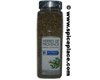
McCormick Whole Bay Leaves
Bay Leaves Are The Classic Herb For Soup And Stew Recipes
Price: $17.98USD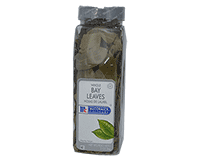
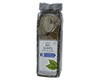
McCormick Bay Leaves, Whole 2oz 56g
Bay leaves are one of those quiet workhorse herbs that make a big difference without calling attention to themselves. A leaf or two added at the start of cooking brings a deep, savory background flavor that makes soups, stews, sauces, and braised dishes taste more “finished.”
These are whole bay leaves from the bay laurel tree, with a warm, slightly woodsy aroma and a mild, tea-like flavor with faint minty notes. They’re a staple in French and Italian cooking and show up just as often in Mediterranean, Caribbean, and everyday home recipes.
Bay leaves work especially well in pot roast, beef stew, chili, chicken soup, tomato sauces, beans, stocks, and marinades. Just drop one or two leaves into the pot and let them simmer slowly. Bay leaves will release flavor over time. Always remove the leaves before serving; they’re meant to season the dish, not be eaten.
This 2 oz container is a good pantry size for regular cooking and keeps the leaves protected so they stay fragrant and ready whenever you need them. Simple, dependable, and essential for slow, savory cooking done right.
Ingredients: Dehydrated Bay Leaves.
| Tiered Product Pricing | ||
|---|---|---|
| Qty: | Description | Price |
| Each | Unit Price | $17.98USD |
| 6 | 6 or More | $17.53USD |
| 24 | 24 or More | $16.99USD |
Product Ingredient Lists and Nutrition Facts, when provided, are for your convenience. We at Spice Place make every effort to insure accuracy of the ingredients listed. However, because manufacturers may change formulations, persons with food allergies should always check actual package label.
McCormick Bay Leaves, Whole 2oz 56g - FAQ
- Q: What are bay leaves and where do they come from?
- A: Bay leaves are the dried leaves of the Laurus nobilis tree, also known as the bay laurel. They are native to the Mediterranean region and are widely used in European, Caribbean, and Latin cuisines.
- Q: What do bay leaves taste like?
- A: Bay leaves have a subtle, savory flavor with hints of mint, pine, and black pepper. When simmered, they infuse dishes with a complex, herbal note that enhances broths, meats, and stews.
- Q: What recipes are bay leaves used in?
- A: Whole bay leaves are commonly used in soups, stews, chili, marinades, stocks, tomato sauces, pot roasts, and braised meats. They're also featured in dishes like cassoulet, chicken cacciatore, and French onion soup.
- Q: How do I use whole bay leaves in cooking?
- A: Add 1 or 2 leaves to your pot at the start of simmering and remove them before serving. The flavor intensifies with long cooking, so avoid using too many.
- Q: Can I eat whole bay leaves?
- A: No. Whole bay leaves are typically removed before serving as they remain tough even after cooking and could pose a choking hazard.
- Q: What's the difference between whole and ground bay leaves?
- A: Whole bay leaves provide gentle, slowly infused flavor and are removed before serving. Ground bay leaves mix directly into food and offer stronger, longer-lasting flavor, ideal for spice rubs or quick-prep dishes.
- Q: Are bay leaves used in international cuisines?
- A: Yes. Bay leaves are essential in French, Italian, and Mediterranean dishes, but also appear in Indian curries, Latin American adobos, and Caribbean stews.
- Q: How should I store whole bay leaves?
- A: Keep them sealed in a cool, dry place away from light and moisture. Stored properly, they can last up to 2 years without losing potency.
- Q: Are these bay leaves kosher?
- A: Yes, McCormick Whole Bay Leaves are OU Certified Kosher and contain no additives—just pure dehydrated bay leaves.